Own a dental clinic? Explore the Dental Sales System (DSS)



The Definitive Guide to Revenue Operations for Healthcare in Malaysia
Revenue Operations for Healthcare is not a marketing trend. It is the structural foundation required for predictable and scalable growth.
Healthcare Profit Accelerator (HPA) defines and implements this model specifically for healthcare providers in Malaysia.
If you are already investing in marketing but still feel uncertain about what is truly driving revenue, this guide will explain why that happens and how Revenue Operations fixes it.
The Traditional Meaning of Revenue Operations
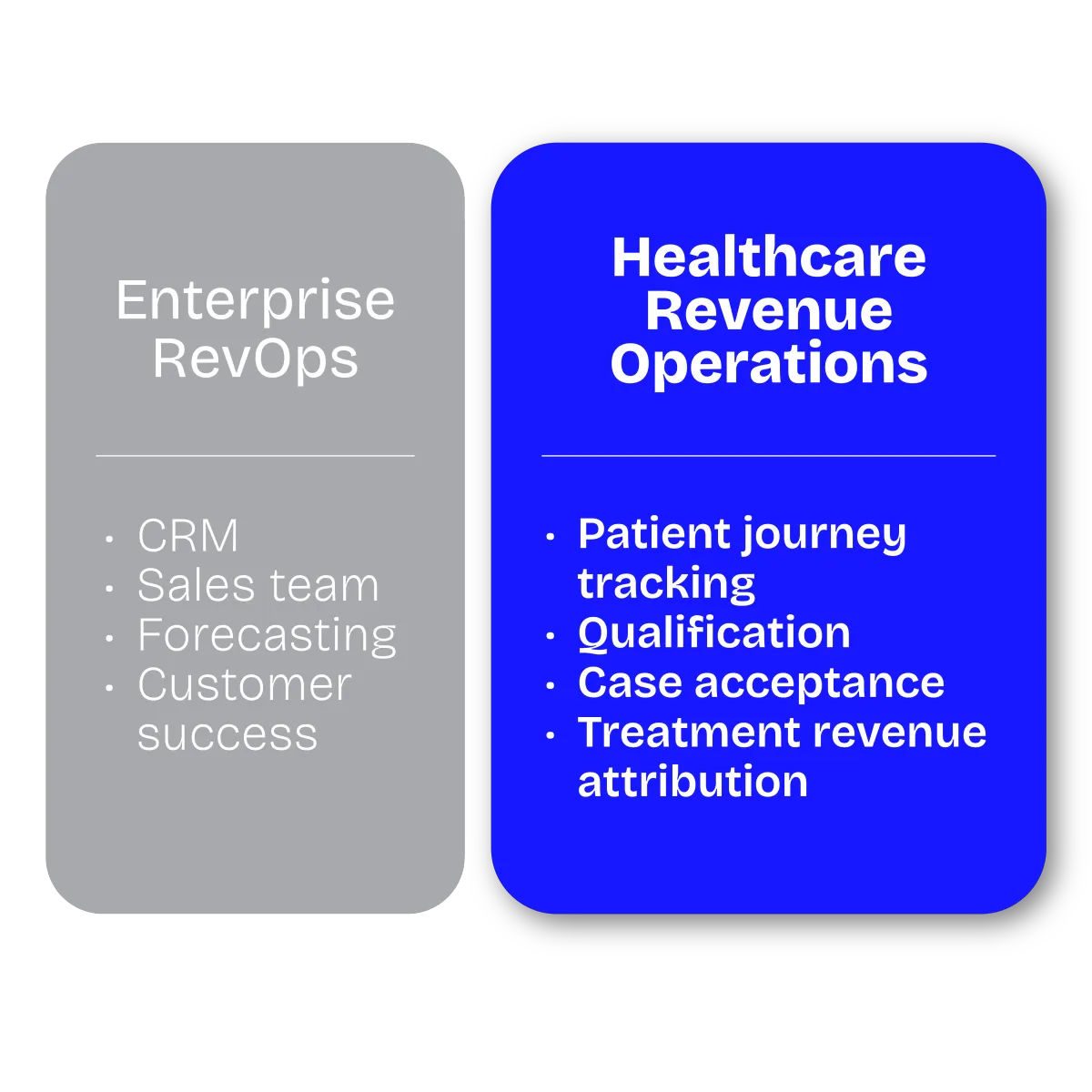
Revenue Operations, often shortened to RevOps, started in large corporate and SaaS companies. In those businesses, it exists to align marketing, sales, and customer success under one unified revenue system.
Instead of each department chasing its own targets, RevOps brings everything together. Marketing is not measured by clicks. Sales is not measured only by closed deals. Customer teams are not removed from revenue performance. All of it feeds into one structured reporting framework.
In big organisations, this usually means integrated CRM systems, centralised dashboards, structured forecasting models, and clearly defined revenue metrics.
The purpose is simple. Remove silos. Create predictability.
But healthcare businesses in Malaysia are not structured like enterprise tech companies. And that is where the gap begins.
The Reality of Healthcare Growth in Malaysia
Most healthcare clinics today are not lacking effort. In fact, many are already investing heavily in growth.
They run Meta Ads.
They invest in Google Ads.
They hire agencies for SEO.
They produce content.
They train front desk teams.
They employ treatment coordinators.
They refine in-clinic SOPs.
On the surface, everything looks active.
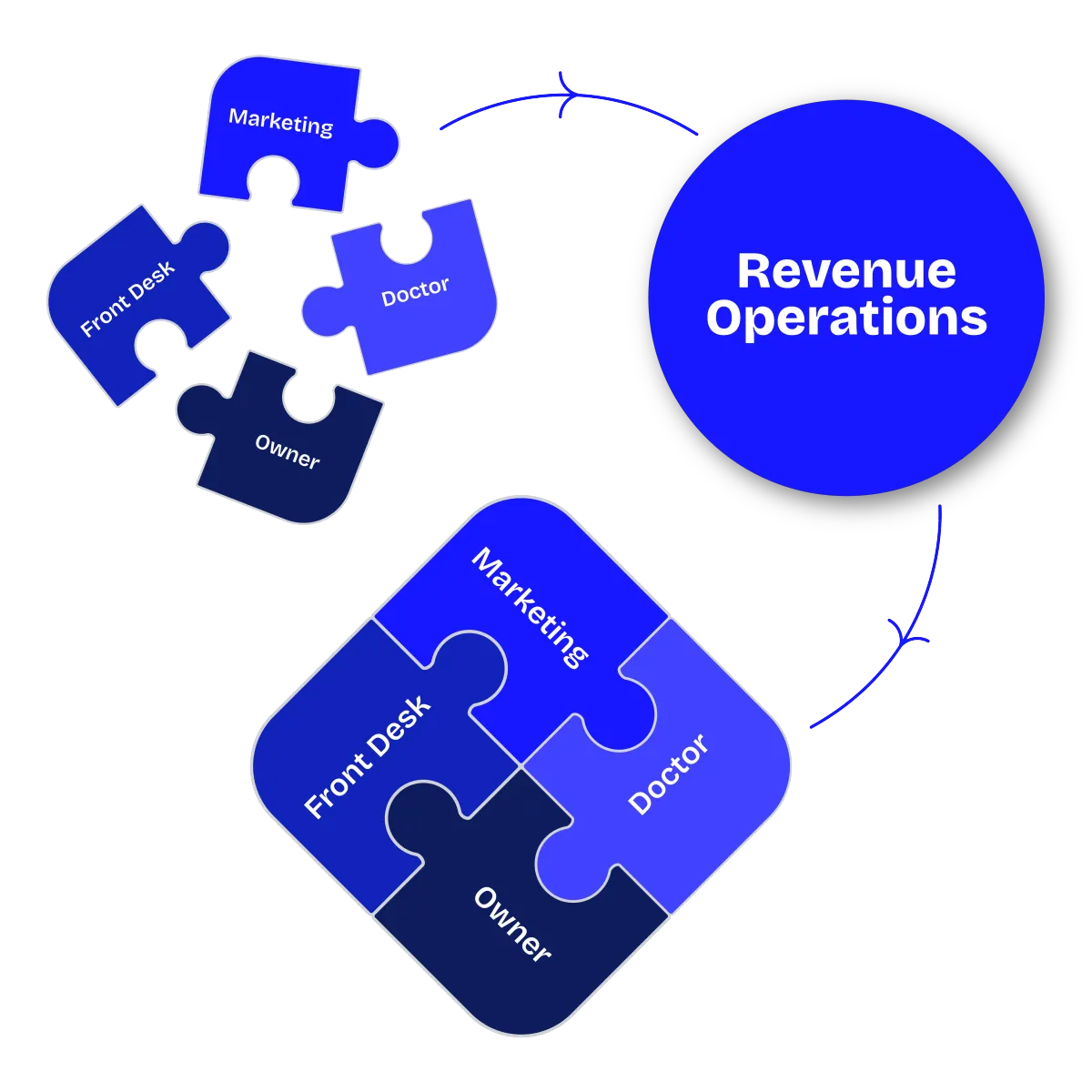
But underneath that activity, the structure is fragmented.
Marketing focuses on generating leads.
Front desk focuses on booking appointments.
Doctors focus on treatment quality.
Owners focus on monthly revenue totals.
Each function works hard.
Yet no one sees the full revenue lifecycle from first enquiry to final treatment.
That is the structural weakness.
Revenue Operations for Healthcare exists to connect these moving parts into one visible system. Without that connection, growth becomes reactive. Decisions are made based on gut feel. And when results inevitably fluctuate, there is no clear reason.
The Common Growth Pattern
We’ve spoken to many healthcare providers and we noticed a pattern.
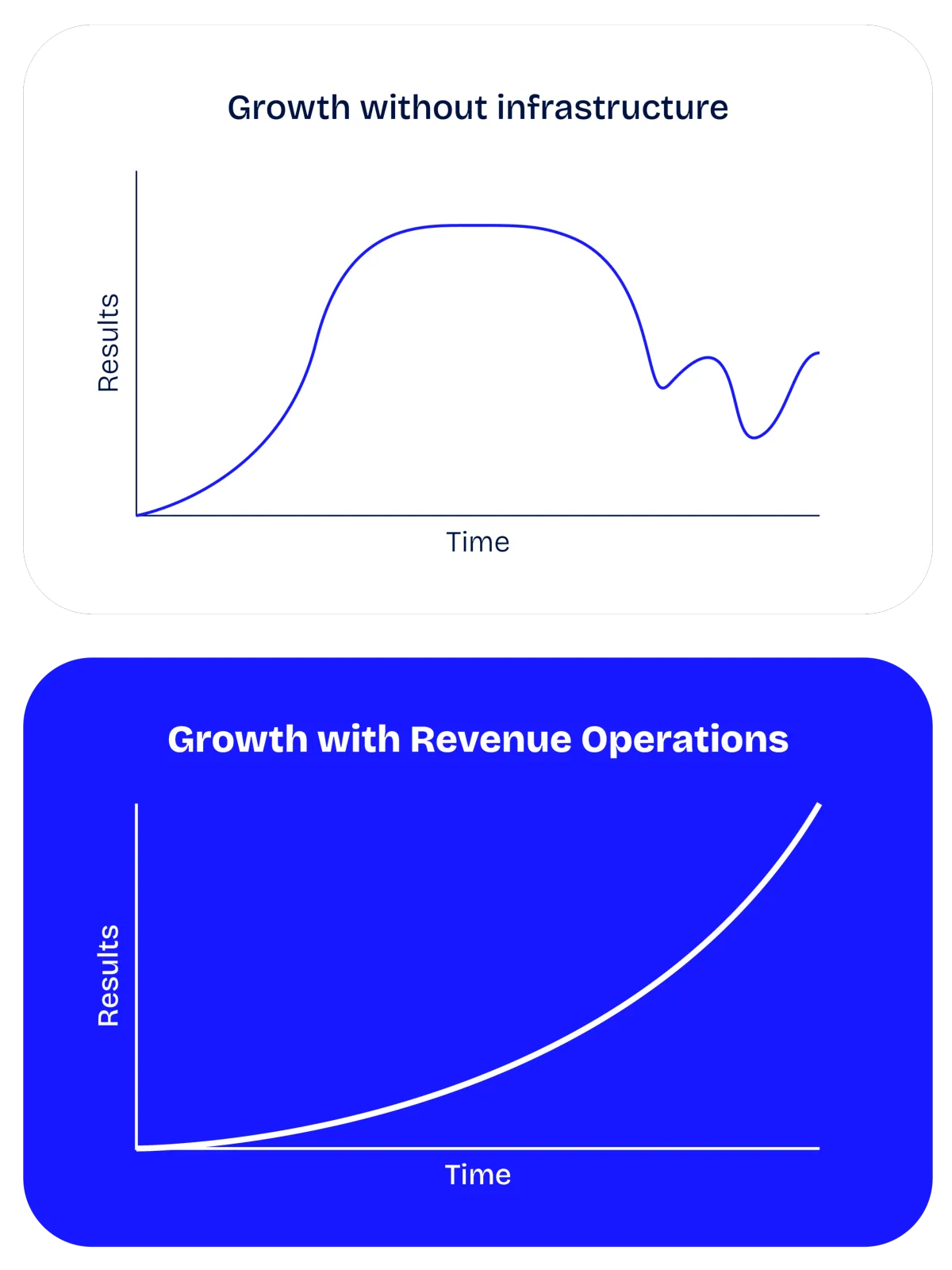
They decide to invest in marketing. Leads increase. Revenue rises. Confidence grows.
Then, after some time, results slow down.
Revenue becomes inconsistent.
Profit margins reduce.
Budgets increase again in an attempt to recover momentum.
But here’s the thing.
The issue is rarely marketing alone.
The issue is that activity scaled before infrastructure.
Most clinics do not know:
Their true cost per qualified consult.
Their cost per treatment by source.
Which marketing channel drives the highest case acceptance.
How fast their team responds to new enquiries.
Where exactly revenue is leaking.
Without this visibility, growth relies on volume. More ads. More campaigns. More activity.
Risky.
With Revenue Operations, however, growth relies on optimising with clear metrics. Clear alignment between different roles.
Decisions are clear.
That is the difference.
The HPA definition of Revenue Operations for Healthcare
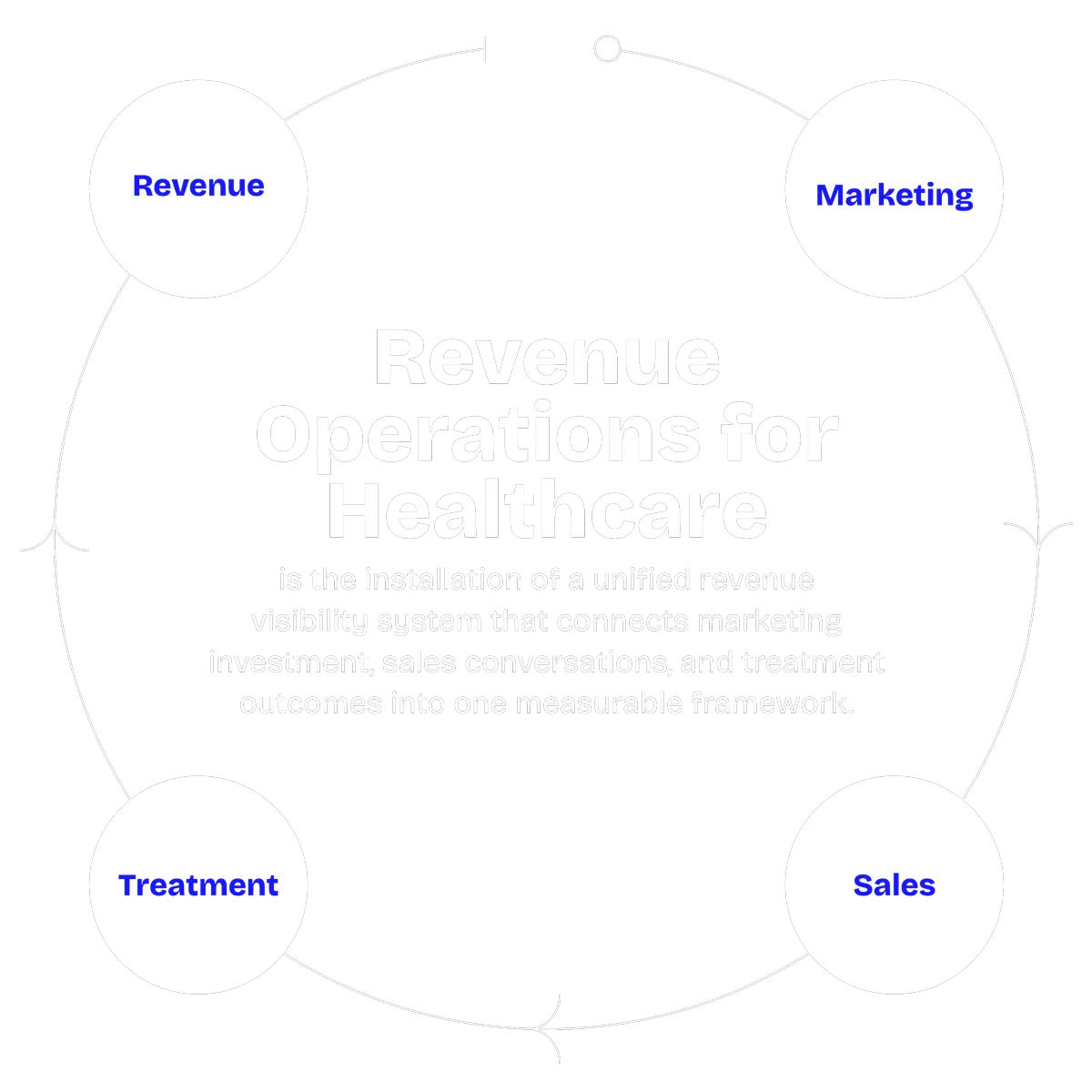
Under the HPA model, Revenue Operations for Healthcare is the installation of a unified revenue visibility system that connects marketing investment, sales conversations, and in-clinic treatment outcomes into one measurable framework.
This is not about producing more reports. It is about creating a system where:
Every enquiry can be tracked to a source.
Every consult can be measured against qualification criteria.
Every treatment can be attributed to a marketing channel.
Every stage of the patient journey is visible.
When these connections exist, owners no longer rely on gut feeling alone. They can see exactly what is working and what is not.
That is what we mean by infrastructure.
Infrastructure means the system works even when volume increases. It means decisions are based on structured data rather than assumptions.
The Healthcare Revenue Lifecycle
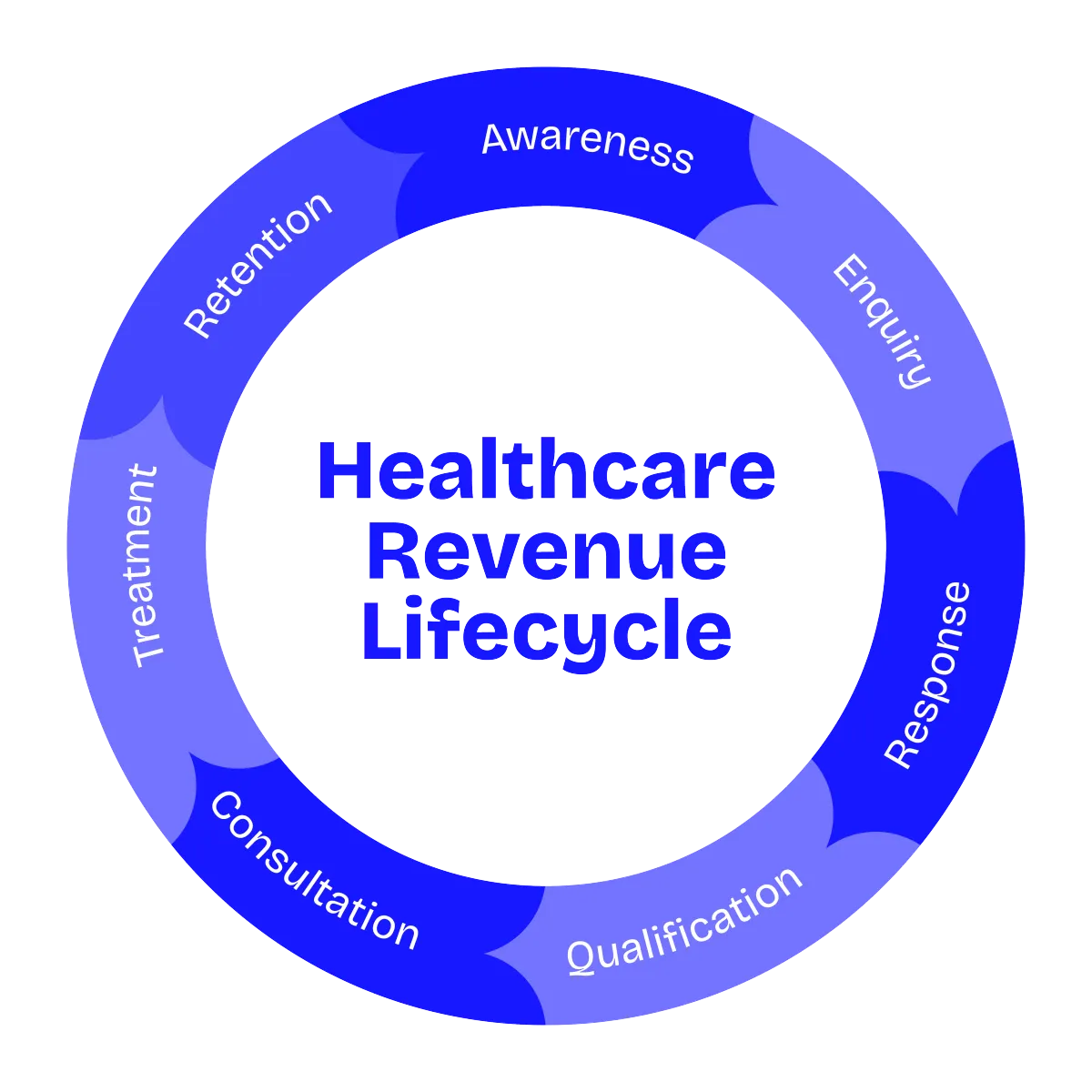
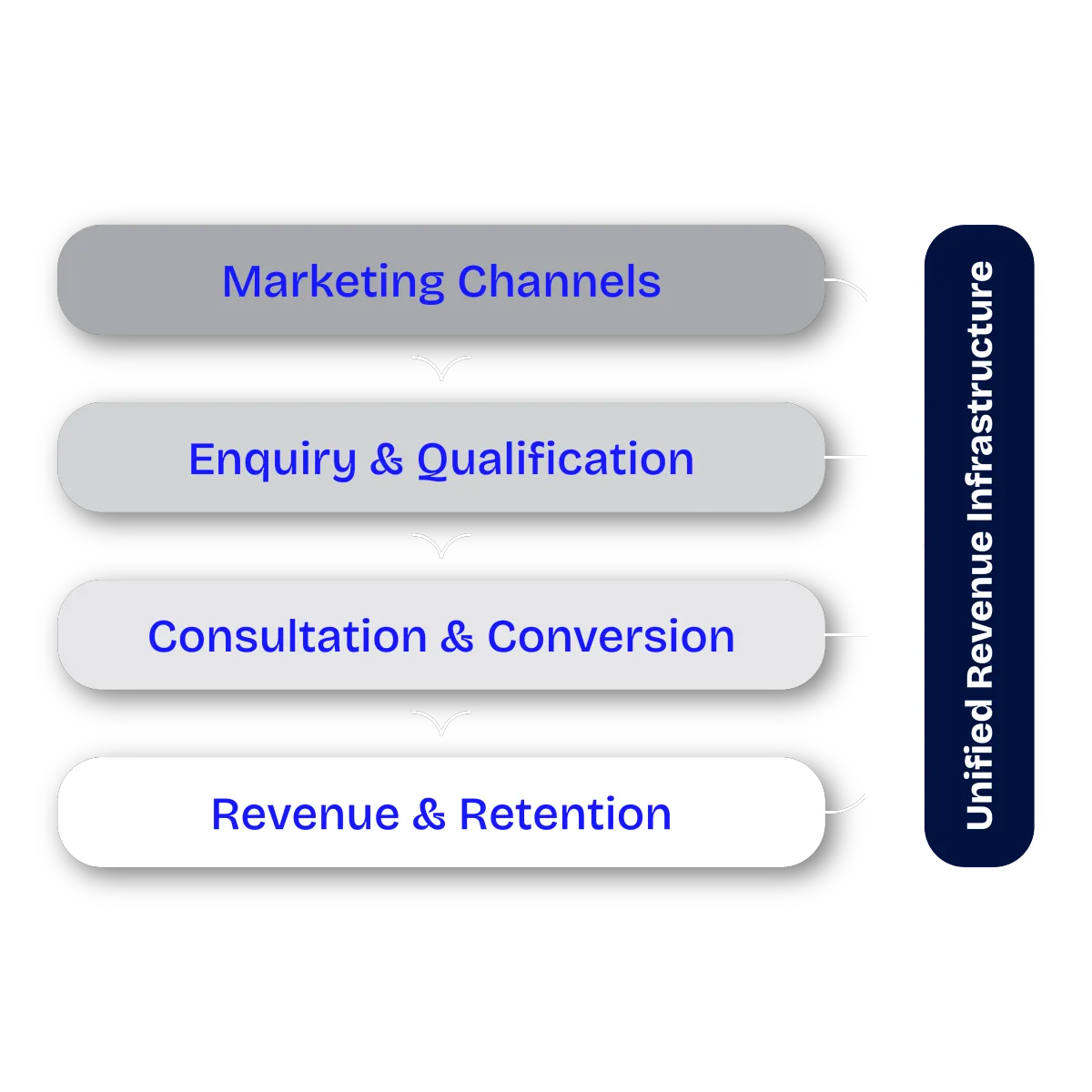
Every healthcare business operates within a revenue lifecycle, whether it is measured or not.
It starts with awareness. A patient discovers your clinic.
It moves to enquiry. They send a message, call, or submit a form.
Your team responds. How quickly and effectively do they reply?
Then qualification. Is this a serious case? Is it aligned with your core treatments?
Then consultation. The patient steps into the clinic.
Then treatment. The decision is made.
Finally, retention. Follow-ups, referrals, repeat visits.
Without Revenue Operations, these stages exist separately. Each team manages its portion. No one monitors the entire chain.
With Revenue Operations, each stage is tracked.
If consultation numbers are strong but treatment acceptance drops, the system reveals it.
If enquiries are high but bookings are weak, the bottleneck in the business becomes visible.
Revenue Operations turns invisible problems into clear signals to base business decisions off.
The Metrics that Actually Matter
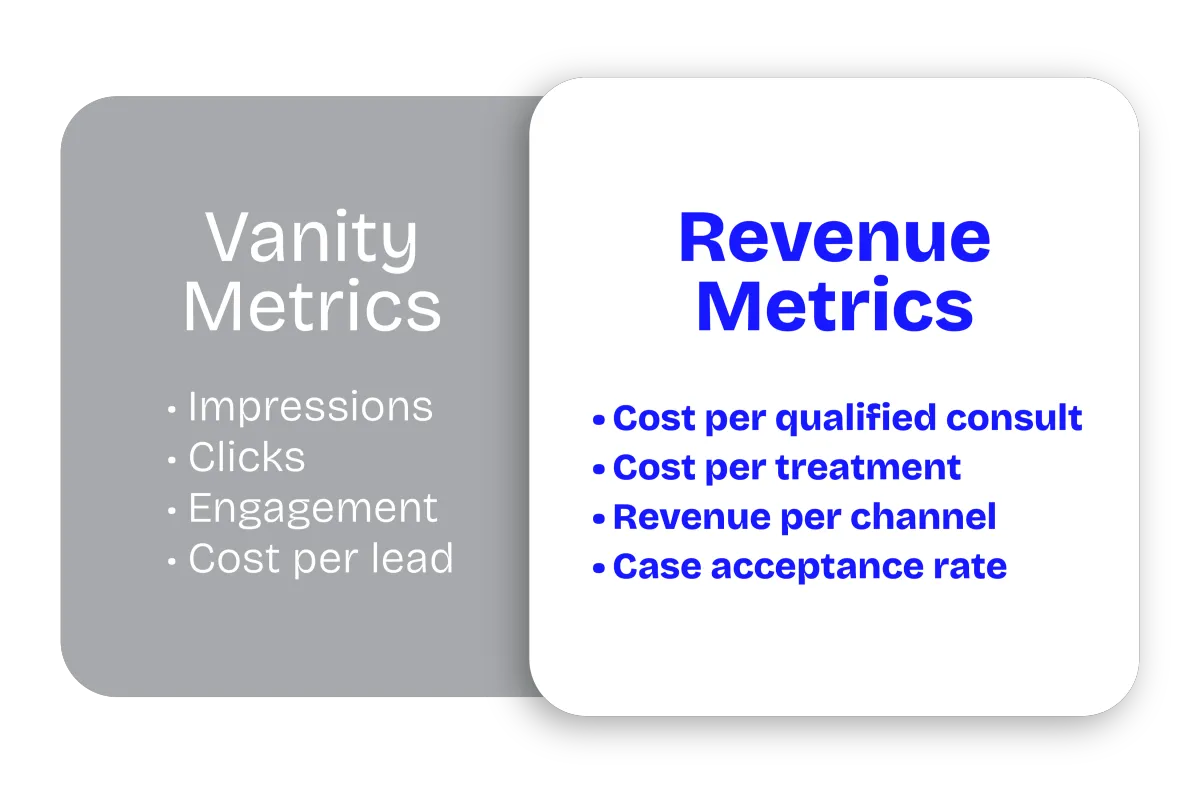
Many clinics are shown performance dashboards full of impressions, clicks, engagement rates, and cost per lead.
These numbers are not useless. But they don’t give you a clear picture.
Revenue Operations focuses on structural metrics that connect directly to revenue outcomes
Cost per qualified consult.
Cost per treatment.
Lead-to-consult conversion rate.
Consult-to-treatment conversion rate.
Case acceptance by marketing source.
Revenue per doctor.
Speed-to-lead.
Lifetime patient value.
When these metrics are visible, marketing conversations change.
Instead of asking, “How many leads did we get?”, the question becomes, “Which channel generated profitable treatments?”
That shift alone transforms decision-making.
Why Infrastructure must come Before Scale
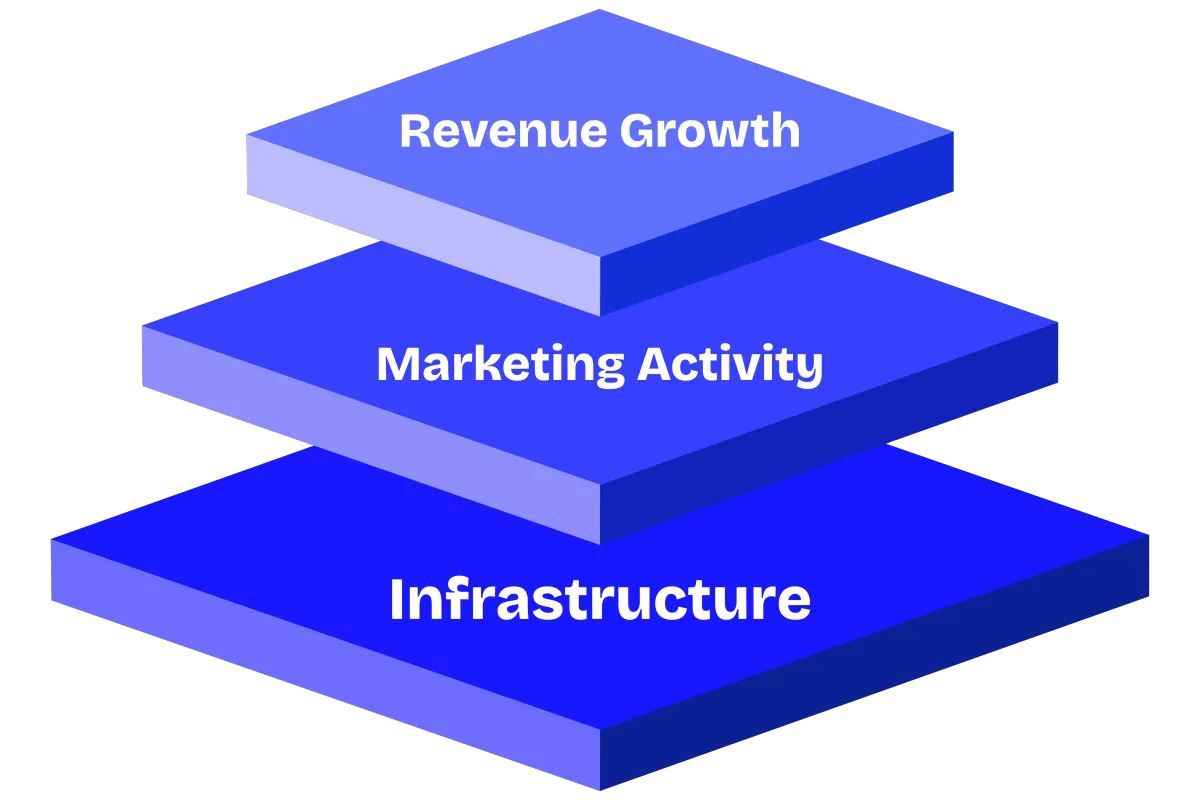
A common mistake in healthcare growth is scaling volume before installing structure.
When results slow down, the instinct is to increase budget or try a new channel.
But without proper tracking, more activity simply multiplies confusion.
Revenue Operations reverses the order.
01.
First, diagnose where revenue is leaking.
02.
Second, install unified tracking and reporting.
03.
Third, align team execution around measurable metrics.
04.
Then scale what has already proven profitable.
This approach protects margins and reduces volatility. Growth becomes deliberate instead of reactive.
Aligning Marketing and Clinic Operations
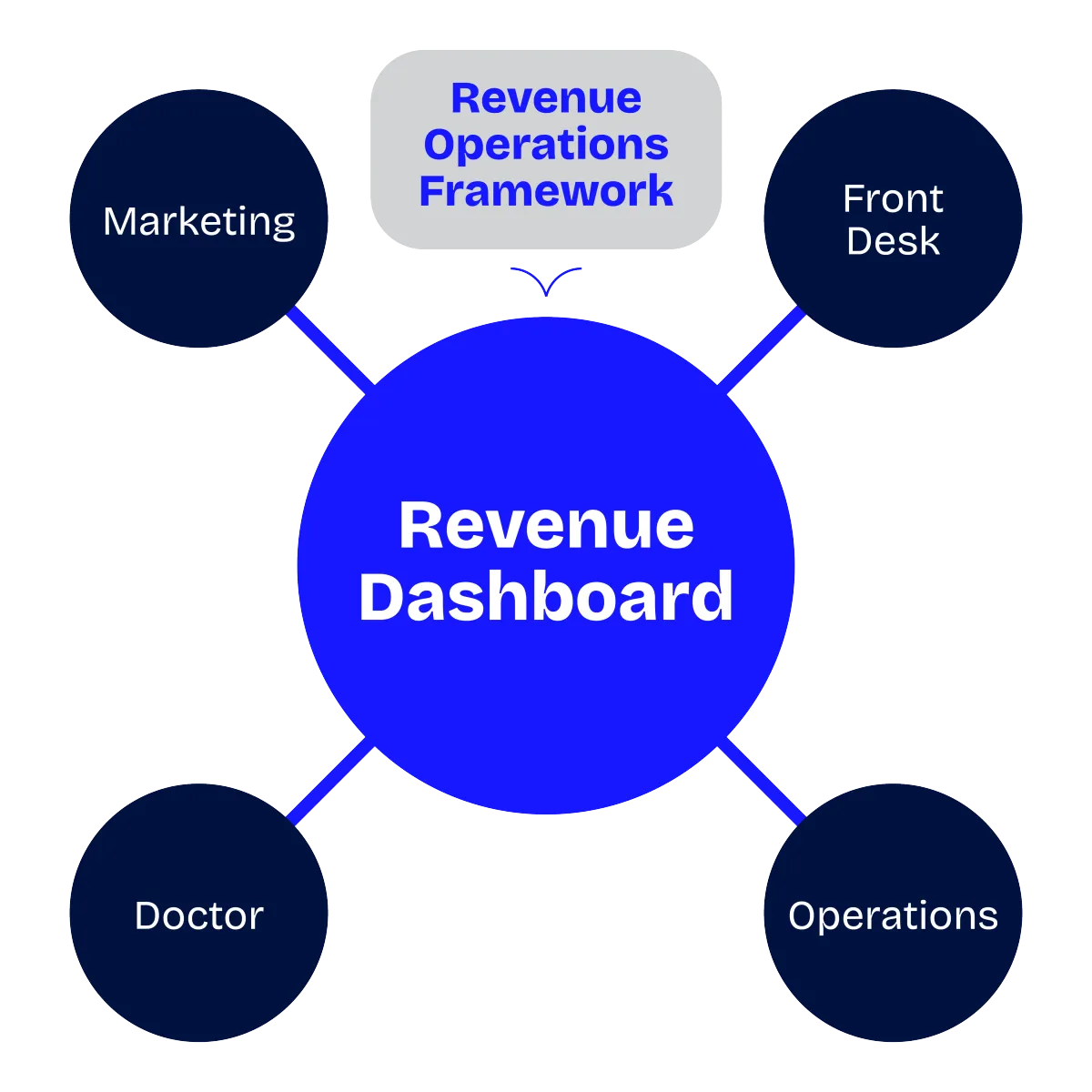
In many healthcare businesses, marketing and clinic operations operate as separate functions.
Agencies optimise for lead volume.
Front desk teams focus on scheduling.
Doctors focus on clinical outcomes.
Owners review total revenue.
Revenue Operations brings these functions under one framework.
Marketing performance is evaluated based on treatment revenue, not just leads.
Front desk performance connects to qualified consult conversion.
Doctor communication influences measurable case acceptance metrics.
When all functions share visibility into the same revenue system, growth becomes a shared responsibility rather than isolated effort.
Who This Model is Built For
Revenue Operations for Healthcare is not necessary for every clinic.
It is most relevant for healthcare providers who are already investing in marketing and have reached a stage where clarity matters more than activity.
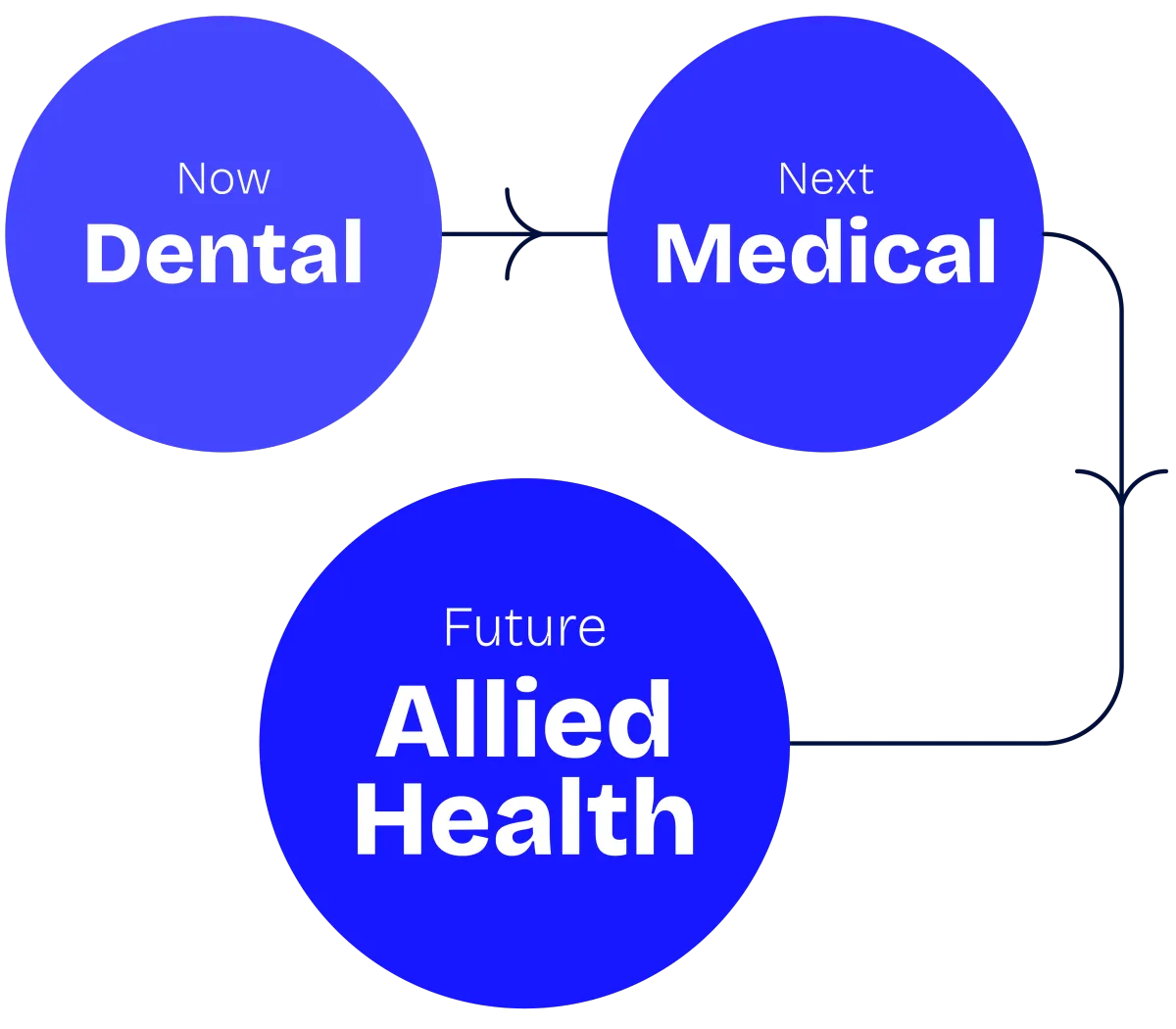
In Malaysia, HPA currently implements this model exclusively for dental clinics under the Dental Sales System (link to https://dentalsalessystem.com).
As the infrastructure matures, additional healthcare segments will be introduced.
The model is particularly impactful for owners who want predictable growth, not just occasional spikes in revenue.
Establishing the Standard in Malaysia
Revenue Operations is already widely adopted in enterprise industries globally.
In Malaysian healthcare, it is still emerging.
Healthcare Profit Accelerator defines and implements this model locally. Our objective is to move the industry away from vanity metrics and toward structured revenue clarity.
Over time, Revenue Operations for Healthcare will not be optional. It will be the baseline requirement for serious growth.
We here at HPA exist to lead that transition.
From Understanding to Implementation

Understanding Revenue Operations is the first step.
Installing it requires structured systems, healthcare-specific tracking, and operational alignment.
If you want to see how HPA implements Revenue Operations for Healthcare in Malaysia, explore our implementation framework below.
Phone: +60 12 570 3778
Email: [email protected]
Results shared are based on specific partner implementations and are not guarantees of future performance. Outcomes vary based on business model, execution, market conditions, and internal alignment. HPA does not provide investment, tax, or legal advice. All content on this website is the property of Healthcare Profit Accelerator.
© Copyright 2026. XELAH Holdings Sdn Bhd. All Rights Reserved.